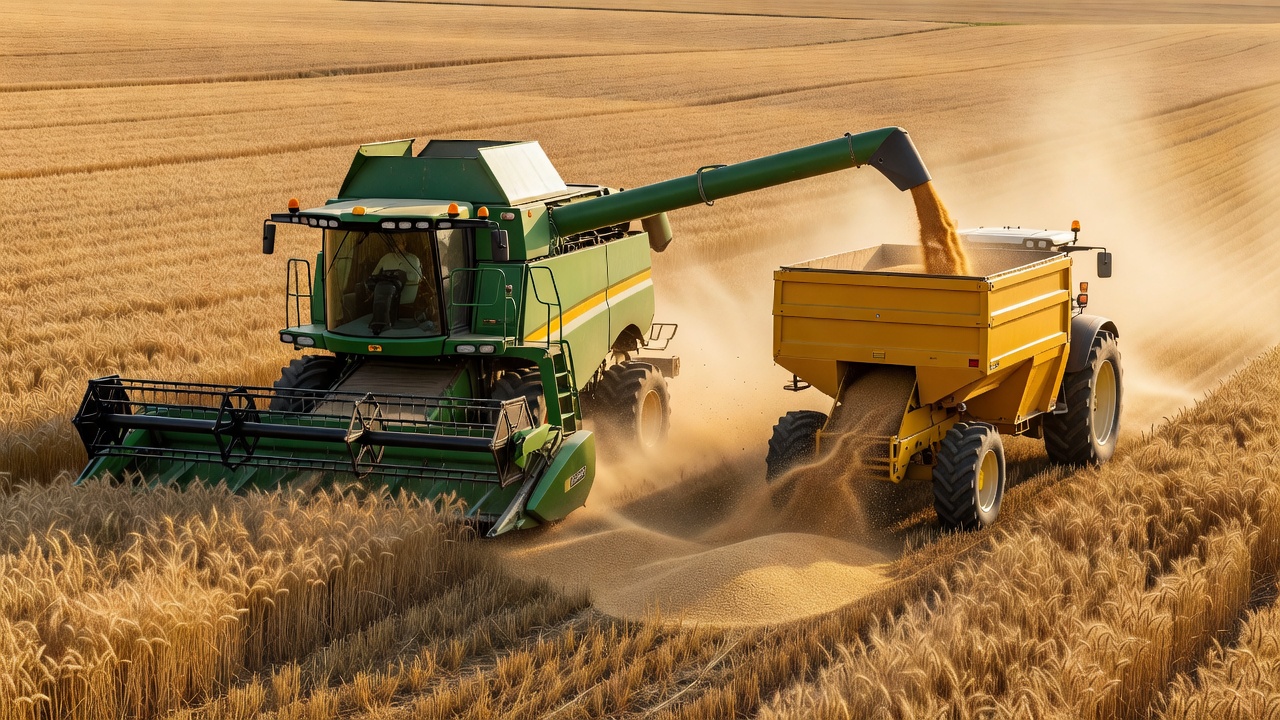
The combine harvester represents one of the most mechanically complex machines in the agricultural sector. As the name suggests, it combines three vital operations into a single continuous process: reaping (cutting), threshing (separating grain from the stalk), and winnowing (cleaning the grain from chaff).
Anatomy of the Harvest
The process begins at the header. The choice of header—whether an auger header, a draper header, or a specialized corn head—determines how smoothly the crop flows into the feederhouse. Draper headers have become increasingly popular for small grains like wheat and soybeans because they use continuous belts to transport the crop, resulting in smoother feeding and reduced shattering losses at the cutter bar compared to traditional augers.
Conventional vs. Rotary Threshing
Once inside the machine, the crop enters the threshing mechanism. This is where the primary divergence in combine architecture occurs:
- Conventional Straw Walker Combines: Utilize a tangential threshing cylinder and a concave grate. The crop passes between the cylinder and concave, rubbing the grain from the head. The remaining straw is tossed onto oscillating straw walkers, which shake out any trapped grain. Conventional machines are known for maintaining excellent straw quality (ideal if straw is being baled for bedding) and perform well in high-moisture conditions. However, their physical size limits their maximum throughput.
- Rotary Combines: Replace the cylinder and walkers with one or two large longitudinal rotors. The crop spirals around the rotor multiple times, using centrifugal force and friction to separate the grain. Rotary combines offer significantly higher capacity, making them the standard for large-scale operations in dry conditions. The downside is that they require more horsepower and can pulverize the straw, making it less suitable for baling.
- Hybrid Combines: Merge the two concepts, utilizing a conventional tangential threshing cylinder followed by twin separation rotors instead of straw walkers. This provides a balance of gentle threshing, good straw quality, and high separation capacity.
Cleaning Systems and Grain Handling
After separation, the grain falls to the cleaning shoe, which consists of oscillating sieves (chaffer and shoe) and a powerful fan. The fan blasts air through the sieves, blowing the lighter chaff out the back of the combine while the heavier grain falls through the sieve openings into the clean grain auger. Managing the fan speed and sieve openings is critical; too much air blows good grain out the back (grain loss), while too little air results in a dirty sample in the grain tank.
Automation and Telematics
Modern combines heavily leverage automation to mitigate the complexity of adjusting these settings. Systems utilizing acoustic sensors on the separation grates and cameras in the clean grain elevator can automatically adjust rotor speed, fan speed, and sieve clearance in real-time. If the camera detects cracked grain, the machine will automatically widen the concave or slow the rotor. If acoustic sensors detect excessive grain loss over the sieves, the fan speed is adjusted dynamically.
Telematics further enhance productivity by transmitting yield maps, moisture levels, and engine diagnostics back to the farm office. This allows fleet managers to coordinate chaser bins effectively and ensures that no harvesting time is lost to preventable mechanical failures.