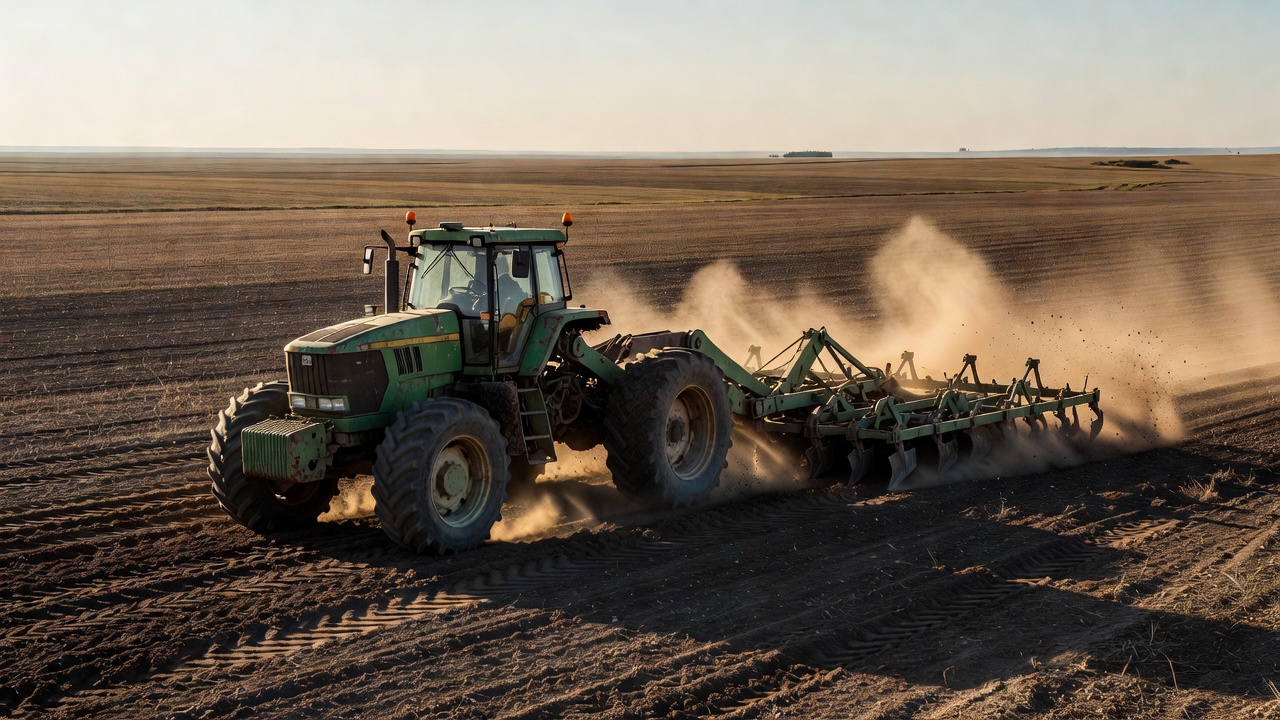
The tractor is the fundamental power unit of any agricultural operation. Over the past few decades, tractors have evolved from simple internal combustion engines on wheels into highly sophisticated, data-driven machines capable of autonomous steering, complex hydraulic management, and real-time implement communication.
Primary Tractor Categories
Selecting the right tractor begins with understanding the core categories based on chassis design, horsepower (HP), and intended application:
- Utility Tractors (40–100 HP): Designed for general-purpose tasks around the farmstead. These are often used for front-loader work, running smaller balers, or maintaining pastures. They prioritize maneuverability and ease of use over raw pulling power.
- Row-Crop Tractors (100–400 HP): The workhorses of arable farming. They feature adjustable track widths to pass between crop rows without damaging the plants. High ground clearance and versatile Power Take-Off (PTO) options make them ideal for planting, spraying, and heavy tillage.
- 4WD Articulated Tractors (400+ HP): Built for broadacre farming where immense pulling power is required. Their articulated steering allows the massive chassis to turn efficiently while pulling the widest seed drills and deep rippers. These heavily rely on dual or triple tire configurations, or tracks, to minimize soil compaction.
- Specialty Tractors: Narrow tractors for vineyards and orchards, or low-profile designs for poultry sheds. They are engineered to operate in highly restricted spaces while still providing standard PTO power.
Transmissions: From Mechanical to CVT
The transmission dictates how efficiently engine power is converted into forward motion. Modern operations generally choose between advanced Powershift and Continuously Variable Transmissions (CVT).
Powershift Transmissions utilize multiple clutch packs to allow gear changes under load without interrupting power to the wheels. They are highly efficient for heavy draft applications (like deep tillage) because the mechanical connection to the ground is extremely robust. However, finding the exact speed for a specific PTO task can sometimes require compromising on engine RPM.
Continuously Variable Transmissions (CVT) blend mechanical and hydrostatic power to provide infinite speed control independent of engine RPM. This means an operator can set a specific forward speed, and the tractor will automatically adjust the engine speed to handle the load efficiently, saving significant amounts of fuel during transport or light PTO work. While more expensive upfront, CVTs often pay for themselves through fuel savings and operator comfort.
Hydraulics and PTO
Modern implements demand substantial hydraulic flow. A standard closed-center load-sensing (CCLS) hydraulic system only pumps oil when required, reducing parasitic horsepower loss. When evaluating a tractor, buyers must consider the maximum hydraulic flow rate (measured in gallons or liters per minute) and the number of selective control valves (SCVs). Large air seeders, for example, require high continuous flow to run hydraulic fan motors.
Emissions and Maintenance
Regulatory frameworks such as Tier 4 Final in the US and Stage V in Europe have necessitated complex exhaust aftertreatment systems. Modern tractors commonly employ Selective Catalytic Reduction (SCR) requiring Diesel Exhaust Fluid (DEF), alongside Diesel Particulate Filters (DPF). While these systems drastically reduce nitrogen oxides and particulate matter, they require strict adherence to maintenance schedules to avoid sensor failures or derating conditions.
Ultimately, purchasing a tractor is an exercise in matching the machine's power and hydraulic specifications to the implements it will pull, while ensuring the dealership network can provide adequate support for its sophisticated electronic systems.