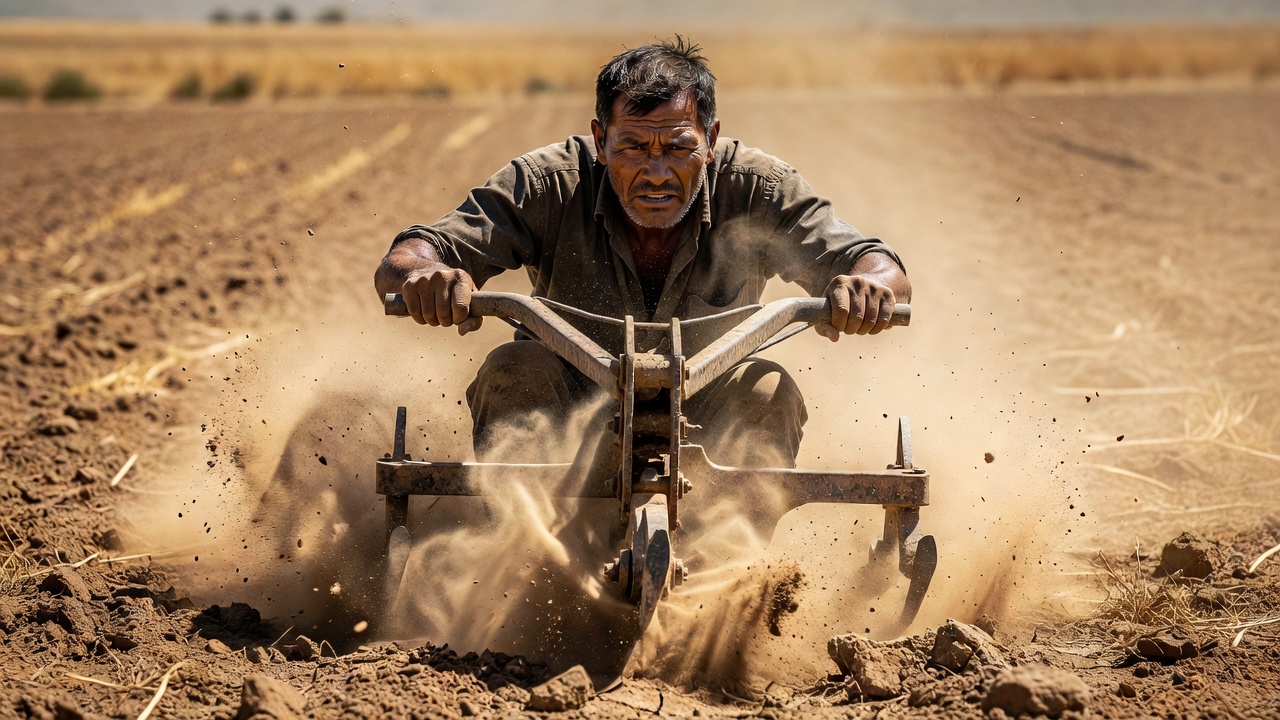
Tillage is the mechanical manipulation of soil to provide a favorable environment for crop growth. It encompasses a vast array of implements designed to loosen the soil, manage crop residue, control weeds, and incorporate fertilizers. Understanding the distinction between primary and secondary tillage—and knowing when to minimize both—is critical to sustainable agronomy.
Primary Tillage
Primary tillage is the first and deepest pass over a field, typically performed after harvest to fracture compacted soil and manage heavy residue.
- Moldboard Ploughs: The traditional icon of farming. The moldboard plough slices, lifts, and completely inverts the soil profile. This buries surface residue and weed seeds deep underground, providing a clean slate for the next crop. However, it requires massive amounts of horsepower, consumes significant fuel, and leaves the bare soil highly vulnerable to wind and water erosion.
- Chisel Ploughs and Rippers: These implements use robust shanks to fracture the soil vertically without turning it over. This method breaks up hardpans (compacted layers below the surface) while leaving a high percentage of crop residue on the surface to protect against erosion. Deep ripping is especially common in areas suffering from tractor-induced compaction.
- Disc Harrows (Heavy Duty): Large offset discs are used to aggressively chop stalks and mix them into the top few inches of soil. They are highly effective in managing thick corn stalks, speeding up the decomposition process.
Secondary Tillage
Secondary tillage is typically shallower and focuses on refining the soil surface to create a level, fine seedbed before planting.
- Field Cultivators: Featuring multiple rows of flexible C-shanks equipped with sweeps, field cultivators gently loosen the top layer of soil, uprooting newly germinated weed seedlings and breaking up clods.
- Power Harrows and Rotary Tillers: Driven by the tractor's PTO, these actively spin tines or blades to finely pulverize the soil. They are common in vegetable operations where extremely fine seedbeds are required, though their aggressive nature can destroy soil structure if overused.
- Rollers and Packers: Often towed behind a cultivator, these heavy, ribbed cylinders gently compress the soil surface, breaking final clods and ensuring good seed-to-soil contact for upcoming planting operations.
The Shift to Conservation Tillage
Intensive conventional tillage oxidizes organic matter and damages the soil microbiome. As a result, the industry is seeing a widespread shift toward conservation practices:
Minimum-Till (Min-Till): Reduces the number of passes. Instead of ploughing and then cultivating twice, a farmer might use a single-pass combination tool that utilizes discs, tines, and a roller simultaneously to prepare the seedbed.
No-Till (Zero-Till): Eliminates tillage entirely. Specially designed planters slice a narrow V-trench through the untilled soil and surface residue, drop the seed, and close the trench. No-till dramatically improves soil moisture retention, builds organic matter, and cuts fuel costs, though it requires a heavy reliance on herbicides for weed control and specialized, heavy planters to penetrate the unworked ground.